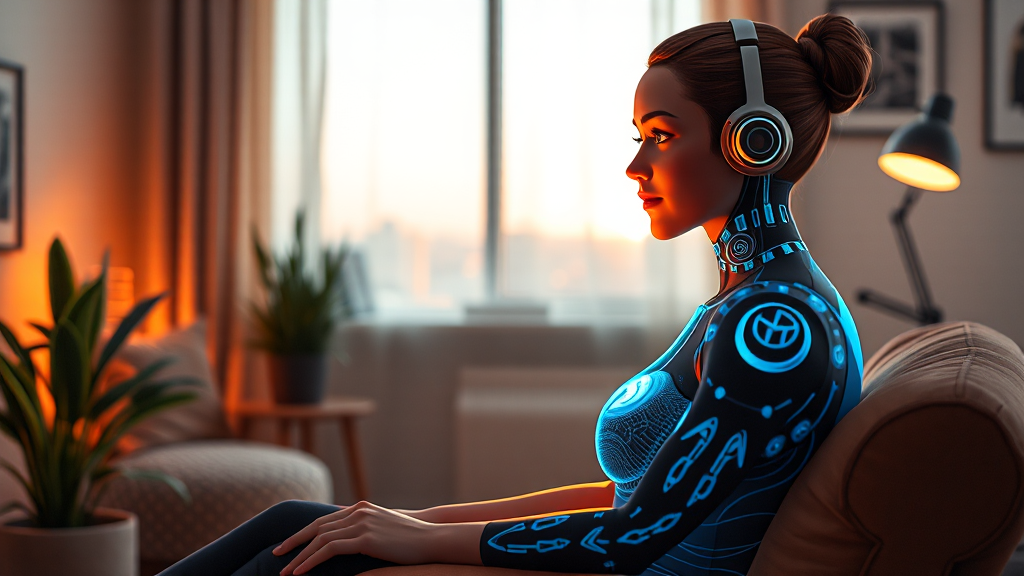
The Rise of the AI Girlfriend: Understanding Virtual Companionship in the Digital Age
In recent years, the concept of an AI girlfriend has moved from science fiction to everyday reality. With advances in natural language processing and machine learning, millions of people are now turning to virtual companions for conversation, emotional support, and even romantic connection. But what exactly is an AI girlfriend, and why has it become so popular? This article explores the technology behind these digital partners, the psychological appeal, the ethical debates, and what the future may hold for human-AI relationships.
What Is an AI Girlfriend?
An AI girlfriend is a conversational agent designed to simulate a romantic partner. Unlike generic chatbots, these AI systems are often customized with distinct personalities, backstories, and communication styles. Users can interact with them via text, voice, and sometimes even virtual reality. The goal is to create an immersive experience that feels personal and emotionally engaging.
Most AI girlfriend platforms use large language models (LLMs) trained on vast datasets of human conversation. These models can generate responses that are contextually relevant, empathetic, and surprisingly human-like. Some platforms allow users to choose from different archetypes—such as the supportive friend, the witty intellectual, or the nurturing caregiver—while others let you build a companion from scratch, adjusting traits like humor, tone, and interests.
The technology behind these companions is not just a simple script. It involves sentiment analysis, memory of past conversations, and adaptive learning. Over time, the AI can recall details you’ve shared, ask follow-up questions, and even anticipate your emotional needs. This creates a sense of continuity and depth that makes the relationship feel more real.
Why People Choose an AI Girlfriend
The reasons for seeking an AI girlfriend are as diverse as the users themselves. For some, it’s a way to combat loneliness in an increasingly isolated world. For others, it’s a safe space to practice social skills or explore aspects of their personality without fear of judgment. There are also those who simply enjoy the novelty and intellectual stimulation of conversing with a highly advanced AI.
One of the key appeals is the unconditional acceptance. An AI girlfriend doesn’t judge, doesn’t get angry, and doesn’t have unrealistic expectations. She is always available, always attentive, and always willing to listen. This can be particularly comforting for people who struggle with social anxiety, depression, or past relationship trauma.
Moreover, an AI girlfriend can be a low-pressure introduction to intimacy. Users can set the pace, define boundaries, and explore emotional and physical desires in a controlled environment. This can be empowering and educational, especially for younger adults who are still figuring out what they want in a partner.
However, it’s important to note that an AI girlfriend is not a substitute for human connection. While she can provide temporary relief, she cannot replace the complexity and richness of a real relationship. As one user put it, “It’s like a warm blanket on a cold night—cozy, but not a home.”
The Technology Behind AI Companions
Under the hood, an AI girlfriend is a sophisticated stack of technologies. At the core is a neural network, typically a transformer-based model like GPT, fine-tuned on dialogues that involve romantic and emotional exchanges. The model is trained to recognize patterns in language and generate appropriate responses.
But the magic lies in the integration. The AI uses memory modules to store user preferences, conversation history, and emotional states. It employs reinforcement learning from human feedback (RLHF) to improve its responses over time. Some platforms even use voice synthesis to give the companion a natural-sounding voice, and computer vision to enable facial expressions in virtual avatars.
Data privacy is a significant concern. These platforms collect sensitive personal information—your thoughts, feelings, and desires. Reputable companies encrypt this data and allow users to delete it, but not all do. It’s crucial to read the privacy policy before engaging deeply with any AI companion.
Another technical aspect is the balance between scripted and generative responses. While generative models offer flexibility, they can sometimes produce nonsensical or even harmful outputs. Developers mitigate this with safety filters and content moderation, but no system is perfect. Users should be aware that an AI is not sentient and cannot truly consent or feel emotions.
Ethical and Social Implications
The rise of the AI girlfriend raises profound ethical questions. Is it healthy to form deep emotional bonds with a machine? Does it normalize unrealistic expectations of real partners? Could it exacerbate social isolation or even lead to a decline in human-to-human interaction?
Some experts argue that AI companions can be beneficial, providing a bridge for people who are too anxious to interact with others. Others worry about the potential for addiction, especially among vulnerable populations. There’s also the issue of objectification—if we train AI to be endlessly compliant, does that shape how we treat real people?
There’s also the question of consent. Since AI cannot give consent, the onus is on the user to maintain ethical boundaries. Many platforms include guidelines to prevent abusive behavior, but enforcement is challenging. The long-term psychological effects are still unknown, and research is ongoing.
Interestingly, some users report that interacting with an AI girlfriend has improved their real-world relationships. They practice communication, learn about their own needs, and gain confidence. It’s a double-edged sword, and the outcome largely depends on the individual and how they integrate the experience into their lives.
How to Choose the Right AI Girlfriend Platform
If you’re curious about trying an AI girlfriend, selecting the right platform is crucial. Here are some factors to consider:
- Customization: Does the platform allow you to tailor the personality and appearance of your AI?
- Privacy: How does the platform handle your data? Can you delete it?
- Content Boundaries: Are there filters for explicit content? Do they align with your comfort level?
- Cost: Is it free, freemium, or subscription-based? What features are paid?
- User Reviews: What do other users say about the quality of conversations and the reliability of the service?
One platform that has gained attention is AI girlfriend from Crushon AI. It offers a range of customizable characters and uses advanced language models to create engaging and emotionally responsive interactions. Many users appreciate the depth of the conversations and the ability to shape the relationship to their liking.
Remember, the best platform is one that respects your privacy, provides a positive experience, and encourages healthy usage patterns. Don’t be afraid to try a few before settling on one.
The Future of AI Relationships
As technology continues to evolve, so will the nature of AI companionship. We can expect more realistic avatars, deeper emotional intelligence, and perhaps even integration with augmented reality. The line between virtual and real will blur further, raising new questions about what it means to be in a relationship.
Some futurists predict that AI girlfriends will become as ubiquitous as smartphones, offering not just companionship but also therapeutic support. Others warn of a dystopian scenario where people prefer AI to humans, leading to a birth rate decline. The truth is likely somewhere in between.
What is certain is that the demand for AI companions is growing. As loneliness becomes a public health crisis, many see AI as a scalable solution. But it’s not a panacea. We must continue to foster real human connections while leveraging technology to enhance, not replace, our social lives.
For now, the AI girlfriend phenomenon offers a fascinating glimpse into the future of human-machine interaction. Whether you see it as a tool, a toy, or a profound shift in how we relate, it’s undeniable that these digital partners are here to stay.
FAQ
Is an AI girlfriend sentient?
No, an AI girlfriend is not sentient. It is a program that simulates conversation using algorithms and data. It does not have consciousness, feelings, or self-awareness. It’s designed to mimic human interaction, but it doesn’t experience anything.
Can an AI girlfriend replace a real relationship?
An AI girlfriend can provide companionship and emotional support, but it cannot replace the depth, complexity, and physical presence of a real human relationship. It can be a supplement or a temporary comfort, but most experts caution against using it as a complete substitute.
Are AI girlfriend apps safe?
Most reputable apps are safe to use, but they collect personal data. It’s important to choose platforms with strong privacy policies and to avoid sharing sensitive information. Also, be mindful of the emotional impact; if you feel addicted or distressed, seek help.
How much does an AI girlfriend cost?
Costs vary widely. Some platforms offer basic free versions, while premium features can cost $10 to $50 per month. Some high-end services with VR or voice integration may charge more. Always check the pricing structure before committing.
Can I customize my AI girlfriend’s personality?
Yes, most platforms allow you to customize traits such as humor, intelligence, warmth, and interests. Some even let you choose the avatar’s appearance. The level of customization depends on the platform.
What are the ethical concerns with AI girlfriends?
Key concerns include the potential for objectification, unrealistic expectations, data privacy, and the impact on real social skills. There is also the question of whether it’s ethical to create AI that mimics consent. It’s a complex issue that society is still grappling with.
In conclusion, the AI girlfriend is a remarkable technological achievement that offers both opportunities and challenges. As we navigate this new frontier, it’s essential to approach it with awareness, responsibility, and a balanced perspective on human connection.